
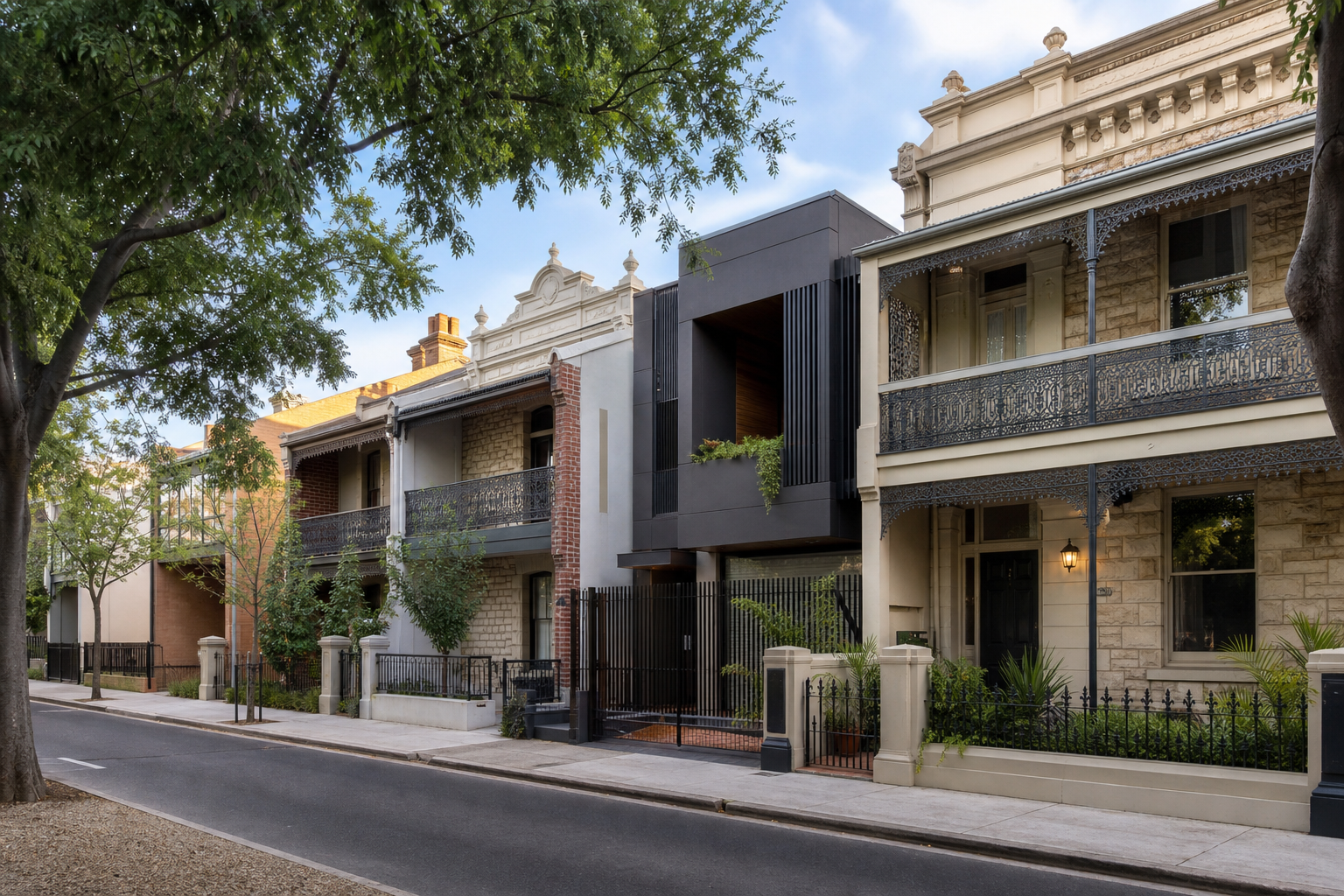
Terrace housing renewal — established inner Adelaide street with heritage streetscape character and infill opportunity behind existing cottages. Medium-density delivery with heritage interface coordination.
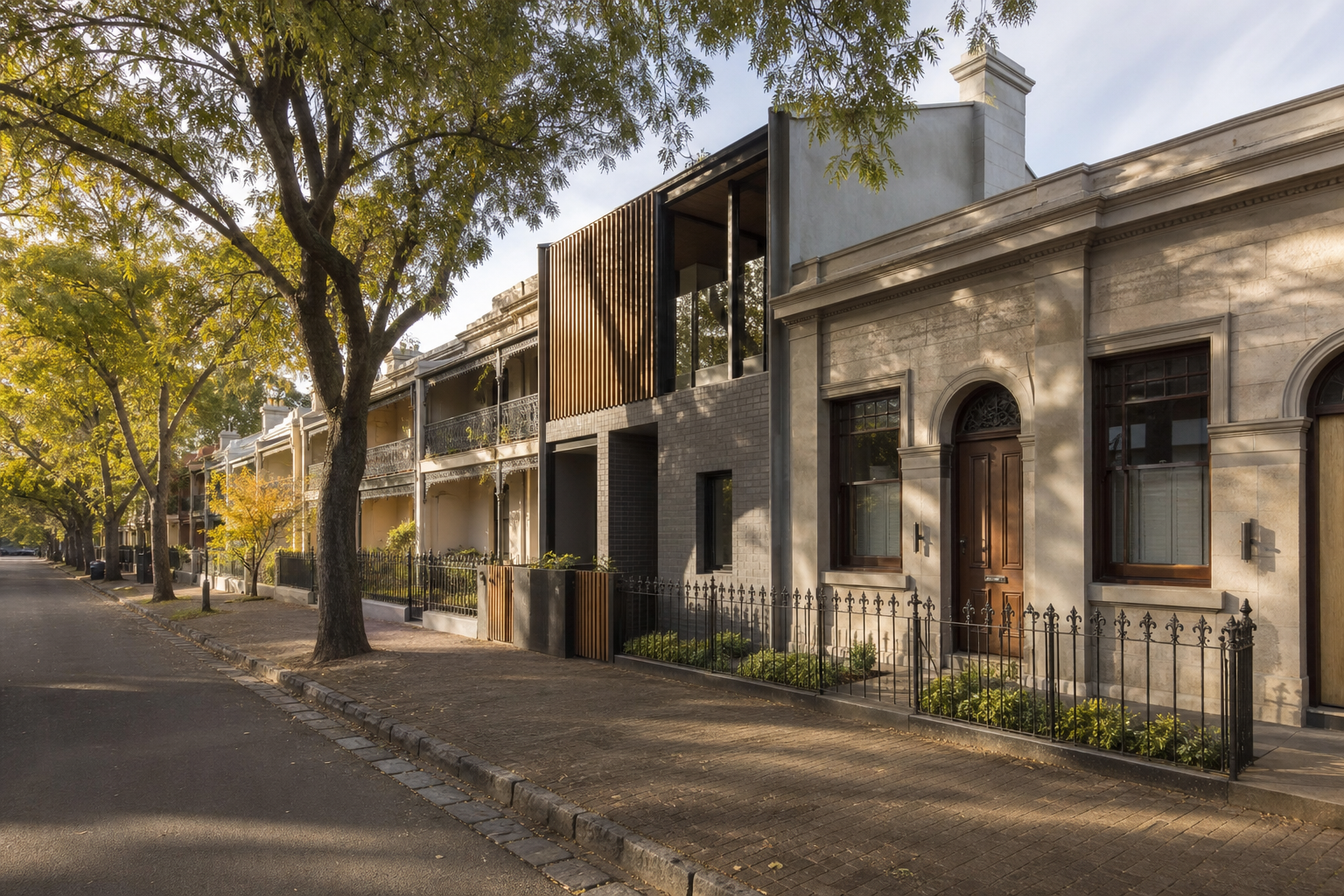
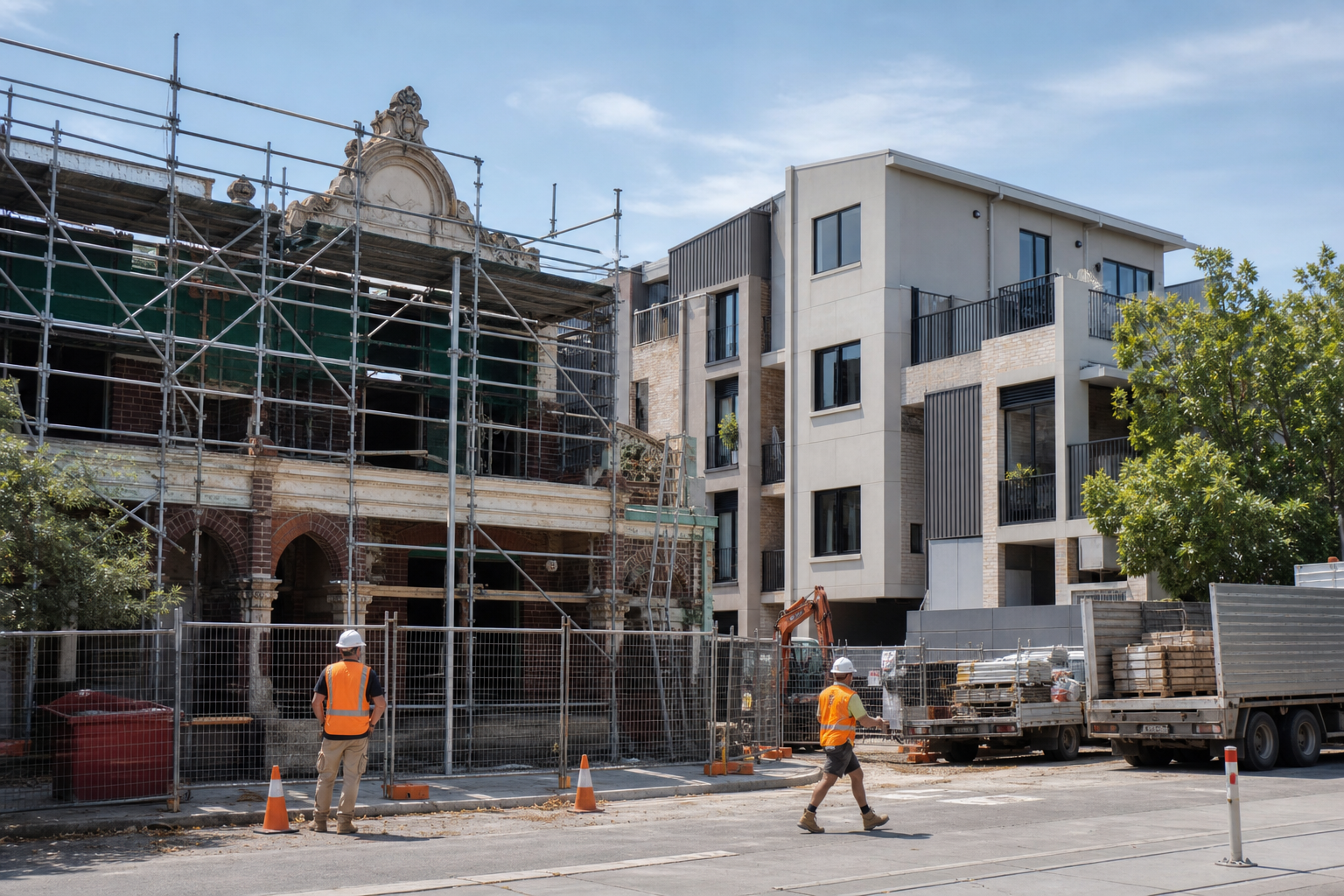
Context
The owner held multiple contiguous titles with ageing cottages and sought a renewal pattern respecting street rhythm while improving yield. Heritage advisers flagged façade controls and roof form expectations early; geotechnical conditions varied across the row.
Difficulties encountered
- Neighbour objections focused on shadowing and construction access via narrow laneways.
- Heritage conditions required mortar and roof material matching that extended lead times.
- Split contracts between demolition and construction created interface gaps in waterproofing responsibility.
- Stormwater upgrades required connection to an undersized local drain with authority-imposed timing.
Measures taken
We structured community engagement with factual access plans and construction hours. A single responsibility matrix assigned waterproofing and structural ties across contracts. Stormwater works were front-loaded with authority agreement on temporary pumping during connection, documented in the conditions register.
Outcomes
Approvals achieved without third-party appeal. Terraces completed with heritage sign-off on external materials. Laneway access disputes avoided through pre-announced delivery schedule shared with neighbours. Owner achieved target yield band within revised cost range after heritage material escalation.
`nHeritage compliance evidence
Mortar and roof material samples were approved before bulk order, preventing wholesale replacement after inspection holds.
Contractor coordination
Demolition and construction contractors shared a single waterproofing matrix signed by both before basement works commenced.
Heritage coordination
Façade samples and roof material approvals were sequenced before bulk procurement. Heritage adviser hold points were integrated into the construction programme.
Neighbour interface
Construction hours and laneway delivery schedules were distributed to adjoining owners with contact details for site management. Complaints dropped after proactive scheduling.
Outcome measures
Terraces achieved practical completion within the revised cost band after heritage material escalation. Yield matched the approved option gate selected at feasibility.
Laneway logistics
Just-in-time deliveries through laneways were scheduled to avoid blocking neighbour access during peak periods.
Heritage procurement
Material samples were approved before bulk orders for mortar and roofing, avoiding wholesale replacement after inspection holds. Heritage adviser checkpoints were embedded in the construction programme, not treated as post-completion fixes.
Neighbour outcomes
Structured construction schedules for laneway deliveries reduced complaints compared with informal site practices on prior nearby projects.
Terrace renewals in heritage contexts require material approvals and neighbour logistics as programme drivers equal to construction itself. Front-loaded stormwater and waterproofing matrices reduce disputes common on laneway sites.